Showing posts with label information sharing. Show all posts

Monday, November 23, 2009

SOCIALISM 2009 MALAYSIA – A REVIEW

SOCIALISM 2009 MALAYSIA – A REVIEW

This year socialism was attended by a broad range of people from students, leftists, activists, liberals, progressives as well as the hardcore. The seats were always packed, the discussions were always hot and the environment was red. Maybe the topic chosen by the organisers and its timing was the pulling factor – 2 Party System in Malaysia, A Critical Analysis.

The first panel who discussed on the theory of 2 party system and the experiences of other countries basically did not have anything good to say about the 2 party systems. For example Harris was quite critical about the existing situation in Malaysia where we have both Barisan Nasional & Pakatan coalitions as ruling party for the first time in history. He was off the view that rhetoric alone is not going to save Pakatan and they need to work hard to bring reforms, otherwise a third force driven by ‘rakyat’ is the solution to bring real changes desired by people in the 2008 election.

The other panel member, Dr. Kumar from PSM quoted experiences of countries like Britain, Sri Lanka, India, Chile, Soviet Union including the situation in Perak. His conclusion is that “would there be a real change, when we are just replacing Pepsi with Coke?” Anyway, in Malaysia’S context it took 50 years to change from Pepsi to Coke. That definitely says something!

He recommended that we read a book written by Lenin on State and Revolution which argues that as long as there is state, there will be suppression even if it is a Workers State as they need to get rid of the capitalist. But he also mentioned that Soviet Union has proven that you don’t need the capitalist to run the economy, the question now is do you need them to save democracy!

Meanwhile our comrade from Thailand, Vipar Daomanee gave her country situation – not 2 party system but 2 colours, Red and Yellow. The marginalised and the poor are with the ‘red’ faction while the rich and the bourgeoisie are the ‘yellow’ faction. So, which side would you chose?

From the theory, the discussion went to another REALl subject “BN vs. PR: Future of 2 party system in Malaysia” and the panels were quite representative – PY Wong (on behalf of Saifuddin from PKR), Khalid Samad from PAS and Wong Chin Huat representing the civil society. Lots were said and many contradictions as well. For example between the fundamental right to choose and the right to stand in election vs. the so called spoilers! These ‘spoilers’ could be any third force reps including PSM or independent candidates who has genuine intention or concrete programme to bring changes compared to PR. Thus, one of the proposals from the panel was Proportional Representative System. The argument was this would allow more parties or candidates to contest and it gives added balance instead of forcing the voters to choose between two parties as in for example USA.

In Malaysia context, the issue is what does Pakatan has to offer when their policies are very similar to BN. Clearly to woo the voters! Can Pakatan beat the BN in pouring ‘cashes’? Pakatan does not have clear stand on fundamental issues like neo-liberal policies and privatisations. It appears they welcome it! We have 4 states under Pakatan for the past 1.5 years, yet each one are with their own policies and programmes – we don’t see them using their strength or solidarity to bring fundamental changes, for example in restoring Local Council Elections.

We don’t deny the fact that Pakatan Government has taken a lot of initiative to ‘clean up’ BN’s dirty work in terms of money wasted on incompetent contractors and extravagant projects that damages environment and misuse of tax payers money. The marvellous work of Pakatan ‘selected’ city counsellors who are only getting pittance must be applauded too. But the question is ‘are the rakyat happy with what is being done?’ or is the Pakatan government effectively doing ‘what is expected by the grassroots?’

The third panel discussion on THIRD FORCE once again put Pakatan on the spot especially their role in bringing social justice to the nation. The organisers had 3 prominent speakers for this topic, Toh Kin Voon (former Gerakan State Assemblyman), Muhammad Sabu (PAS CC member) and Arul (PSM’s Sec Gen).

Dr. Toh, the first speaker was emphasizing on the failure of existing government to bring social justice to people, the ever growing rich and poor gap, the fear in the rakyat’s mind as well as the need for progressive groups including PSM to build the third force. He also suggested that PSM should work with Pakatan but at the same time retain its independence.

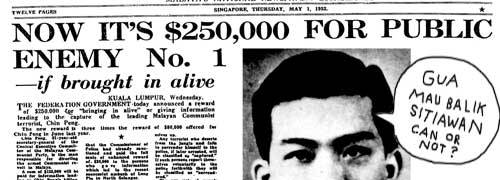
As usual Saudara Sabu, the great orator entertained the audience with his many remarks that was funny yet very significant. Merdeka Review carried on of his annotations “Religion is the opium of the masses”. Mat Sabu also thanked Chin Peng for killing Henry Gurney who was the main character in displacing the Palestinians. Those who were at the forum would not have forgotten his brave remarks, if ever Chin Peng were allowed into the country, his first speech should be held in Sitiawan and 100 thousands will be there. I just want to be the MC”. He called on for the demands to be rewritten.

Another remark he made about the changes brought by the people in 2008 election is an indication that the people would not hesitate to change any government including Pakatan if they fail to deliver. He was very optimistic. He also stressed that as PSM believes in Socialism, PAS believes in Islamic ideology to bring social justice to all regardless race or religion and they should continue to work towards it.

S. Arutchelvan PSM Secretary General was one of the panels and he humbly said that PSM is not done enough to be the third force at this moment. At the same time the party does not have any illusion about 2 party systems. He said that the immediate task at hand is to build the workers force and we should use this moment to radicalise the people and not to give ‘hand-outs’.

The organisers had an open forum the following day at a Chinese Temple opposite Selangor Chinese Assembly Hall in order to give way to PRM Annual Congress at the Assembly hall. PSM felt that since PRM was an older party, it is only honourable to allow it to use the Assembly hall.

The second day forum was on the Impact of Neo-liberal policies and building resistance against neo-liberal offensive. There was good number of foreign and local popular panellists such as Dr. Farish Noor, Charles Santiago, Francisco Dodong from Philippines & many others.

Only again chairs had to be added as the crowd kept coming in.


Comrade Dominggo, the first panellist from Indonesia was very distressed with the fact that more informal sectors (about 70%) causing weakening of unionization among workers. More workers in the industrial site getting laid off and in the labour market, the supply is more than the demand. So, wages goes down, quality of live goes down, education and health goes down but inflation kept growing and so does consumption. Meaning people can’t save and they are embedded with debt. He said that 115 million people in Indonesian surviving with less that USD2 a day. Why? Neo-liberalism

Our second panellist Comrade Dodong spoke more about his government’s involvement in implementing Neo-liberal policy and it seems Philippine is the first country to embrace neo-liberalism in the region. Obviously, since they have ‘special relationship’ with the Americans. He is furious with the national bourgeoisie who were given tons of money by the government took a shortcut by becoming sub-contractors to many industries established overseas and they failed to build technology in their own country. There is imbalance between domestic capital going out and foreign investment coming in. When a nation is highly dependent on foreign investment, it has direct impact on their sustainability.

Our third speaker, comrade Charles expanded the discussion to international level e.g. the Free Trade Agreement bilateral and unilateral dialogues that is currently going on in the region. He also reminded the audience of how much privatisation in Malaysia e.g. water, rice, electricity, health and so on is burdening the grassroots. While on the other hand, government is absorbing loss of the corporate sectors who lacks expertise in the industries they invested and making huge loss. And yet the government reduce the tax of the corporate sectors from 40% (1988) to 26% (2009) while planning to implement Goods and Service Tax that was suspended 2 years back. Meaning the public, 25 million Malaysians will pay tax for every single thing purchased. It’s not a problem at all for the 6% richest in the country, it is certainly too much for the 70% poor and the middle class!

Our last speaker for the first panel, Comrade Farish took us to the global arena. His point of view is that War on Terror is strongly linked to Neo-Liberalism. How? Terrorism is basically a form of resistance. The impact of free market since the 1970’s and the intervention of the FDI – foreign direct investment as well as Structural Adjustment Policies introduced by IMF and World Bank led to social upheaval to many countries in SEA. In order for capitalism to grow, the unions and the leftist who were against the free market were squashed. He says, the resistance also came in the form of ethno nationalist and religio-communalist! The suffering from the neo-liberal policies are immeasurable thus the resistance is growing and how do you counter it? Anti-terrorist campaign of US and its cronies get full support from the ASIA countries as well.

After hearing about the evil of neo-liberal economics, we were introduced to another group of panels, Comrade Mahendra from Indonesia, Vipar from Thailand, Teodorico from Phillipines and Sivarajan from Malaysia. They spoke about “Building Resistance against Neo-liberal Offensive”.

Number of propositions prompt from this discussion – building workers force, working class party, factory occupations and workers self management, joint campaign by SEA left groups, creating the hegemony through various party e.g. Islamic groups, green movement and the socialist. There was strong recommendation that we should be upfront in countering capitalist hegemony and called for class consciousness in the region to fight these emerging trends of capitalism.

Time to time and each speaker almost stressing on the same issue – build the third force driven by the masses by radicalising them and that would able them to make informed decision in determining who hold the power in the government – Islamists, capitalists, liberalists or socialists.

Released by,

Letchimi Devi

Wednesday, September 23, 2009

HUKUMAN SEBAT : KARTIKA BUKAN YANG PERTAMA

there should be more discussion, those have any thought, please do write to suarampg@gmail.com


KENYATAAN MEDIA

09 SEPTEMBER 2009

DEWAN PEMUDA PAS PUSAT
PARTI ISLAM Se MALAYSIA (PAS)

HUKUMAN SEBAT : KARTIKA BUKAN YANG PERTAMA

Ekoran dari isu hukuman sebat terhadap bekas model Kartika Sari dewi Sukarno dan tindakan biadap JAG, SIS dan konco-konconya - Dewan Pemuda PAS Pusat wajar memperjelaskan bahawa :–


1. Kartika bukan lah orang pertama disebat atas kesalahan minum arak. Di Kelantan seramai 6 orang lelaki telah pernah disebat. Tahun 1997; 4 orang, tahun 2001; seorang dan 2003; seorang.

2. Kartika juga bukan wanita pertama dijatuhi hukuman sebatan. Hukuman sebatan Syariah terhadap seorang pesalah wanita pernah diputuskan oleh Mahkamah Syariah Johor pada tahun 2000. Namun pesalah berkenaan telah membuat rayuan ke Mahkamah Rayuan Syariah dan hukuman sebatan telah diketepikan.

3. YA Hakim Dato' Abdul Rahman yang menjatuhkan hukuman sebat ke atas Kartika juga telah pernah menjatuhkan hukuman yang sama beberapa tahun lalu ke atas 2 orang adik beradik yang melakukan kesalahan minum arak . Mereka juga memfailkan rayuan dan rayuan mereka belum didengar.

4. Tohmahan kononnya Kartika dijadikan target untuk disebat adalah fitnah besar terhadap institusi agama, kerana bukan hanya Kartika seorang yang ditangkap dan dijatuhi hukuman sedemikian.Pada masa kejadian, selain dari Kartika, juga telah ditangkap 2 orang lain.- seorang lelaki dan seorang wanita. Keduanya juga dijatuhi hukuman yang sama denda 5000 dan 6 sebatan, namun mereka telah memfailkan rayuan ke Mahkamah Rayuan Syariah Pahang. Justeru, bagi memastikan keadilan dan Kartika tidak dihukum lebih berat dari dua orang lagi yang merayu itu, kesnya telah diputuskan oleh Ketua Hakim Syarie Pahang untuk disemak semula.

5. Hukuman keatas Kartika belum dibatalkan, hanya digantung berikutan keputuasan Ketua Hakim Syarie Pahang, YAA Dato' Abdul Hamid hendak membuat semakan terhadap hukuman ke atas Kartika.

6. Jabatan Penjara pula sudah pun mempunyai seramai 171 orang tukang sebat terlatih termasuk 2 orang tukan sebat wanita. Kesemua mereka terlatih dalam menyebat secara sivil, Syariah dan Kanak-kanak.

7. Seorang penyebat wanita telah membuat demo sebatan Syariah dengan penuh bergaya di hadapan Hakim Rayuan JKSM YA Dato' Asri. YA kemudian mengesahkan dan berpuas hati dengan cara sebatan tersebut.

8. Prosedur sebatan Syariah adalah termaktub dalam sek.125 Tatacara Jenayah Syariah Pahang. Di Negeri lain pun ada tatacara yang sama. Gambarannya, apabila melakukan sebatan, hanya tangan yang terangkat tanpa menampakkan ketiak. Tidak seperti sebatan sivil yang memang bersifat cruel dan menyiksa pesalah, sebatan Syariah bersifat mendidik. Justeru adalah tidak wajar sebatan Syariah disamakan dengan sebatan sivil.

9. Kartika sendiri telah insaf dan bertaubat atas perbuatannya dan menuntut supaya beliau dekenakan hukuman berkenaan. Inilah bukti keberkesanan hukuman sedemikian di zaman ini. Keputusan sama ada Hukuman sebat ke atas Kartika akan dilaksanakan atau sebaliknya terserah kepada Jawatankuasa Rayuan Syariah Pahang yang akan bersidang bagi menyemak hukuman YA Hakim Mahkamah Tinggi Phang itu tidak lama lagi.

10. JAG dan SIS melalui memaorandum kepada PM telah mendesak Kerajaan Persekutuan untuk MEMANSUHKAN UNDANG-UNDANG JENAYAH SYARIAH YANG SEDANG berkuatkuasa di negeri-negeri. Tindakan yang sama juga pernah dilakukan melalui memeorandum yang di kemukakan kepada Kerajaan pada tahun 2005 dan ditandatangani oleh 300 individu dan NGO termasuk Menteri2 Kabinet beragama Islam yang sedang berkhidmat.

DEWAN PEMUDA PAS PUSAT DENGAN INI MENEGASKAN TINDAKAN JAG, SIS DAN KONCO-KONCO MEREKA INI ADALAH TINDAKAN BIADAP MENCEROBOH BIDANGKUASA JENAYAH SYARIAH NEGERI-NEGERI YANG TELAH KITA WARISI SEJAK ZAMAN SILAM DALAM KANUN UNDANG-UNDANG NEGERI-NEGERI MELAYU.


HAJI NASRUDIN HASSAN TANTAWI
KETUA DEWAN PEMUDA PAS PUSAT

BLOG : http://episodeperjuangan.blogspot.com
WEB RASMI : http://pemuda.pas.org.my

Monday, September 14, 2009

PopMuda Post 1: Top 10 Myths Pasal Merdeka

PopMuda Post 1: Top 10 Myths Pasal Merdeka

31 Ogos datang lagi! Masa aku buat research untuk filem ’10 Tahun Sebelum Merdeka’ & ‘Revolusi ‘48’ aku jumpa banyak fakta menarik pasal sejarah perjuangan kemerdekaan negara kita. Jadi today sempena hari merdeka, aku nak kongsi my top ten favourite myths pasal kemerdekaan 31 Ogos 1957 yang masih banyak bikin kita confuse.

#10. Lagu “Tanggal 31” dicipta oleh Sudirman

Sudirman only covered lagu Ahmad C.B. from the 60’s & changed one line from the lyrics. Kalau tak percaya, listen to this!

Tanggal 31 Original version oleh Ahmad CB
.

Tanggal 31 Cover version oleh Sudirman
.

#9. Kita ada “Social Contract” masa merdeka

Where got? Idea kontrak ‘bukan-Melayu dapat citizenship in exchange for hak istimewa orang Melayu’ mula surface in the 80’s. “Ketuanan Melayu” also the same.
.

#8. Malaysia sebuah “negara Islam” sejak merdeka

Sebenarnya Malaysia negara sekular dengan Islam sebagai official religion, bukan Islamic-state!
.

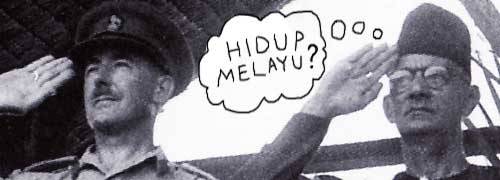
#7. Malaysia bebas 100% dari penjajahan British masa merdeka

Until 1970’s British controlled over 60% kekayaan ekonomi negara dan British military terus stay kat Malaysia sampai 1971!
.

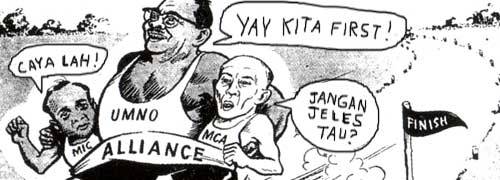
#6. UMNO-MCA-MIC mulakan kerjasama politik antara kaum untuk merdeka

Putera-AMCJA dah start much earlier in 1946. Tengok filem ‘10 Tahun Sebelum Merdeka’ kalau tak percaya.
.

#5. Mamat yang design bendera Malaysia tak ciplak bendera US

Sure or not? :)
.

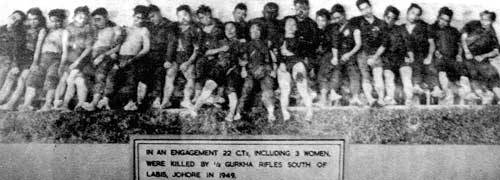
#4. Perjuangan gerila komunis masa darurat bukan untuk kemerdekaan

In 1948, gerila komunis & non-communists lancar revolusi angkat senjata untuk halau penjajah British dari Malaya. Tengok filem ‘Revolusi ‘48’ kalau tak percaya.
.

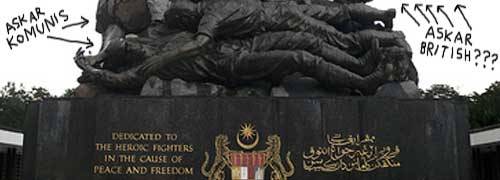
#3. Tugu Negara simbol perjuangan kemerdekaan Malaysia

Kita berjuang untuk kemerdekaan dari komunis atau dari British? Masa kecik, tugu ni buat aku confuse.
.

#2. UMNO pengasas perjuangan kemerdekaan

Before UMNO (est. 1946), Parti Kebangsaan Melayu Malaya (est. 1945) fought for merdeka oredi. Before PKMM, Kesatuan Malaya Merdeka (est. 1938) fought for merdeka oredi. Before KMM, Communist Party of Malaya (est. 1930) fought for merdeka oredi.
.

#1. Malaysia mencapai kemerdekaan tanpa pertumpahan darah

Inilah bapak segala merdeka myths, ditulis dalam semua buku teks, reinforced setiap tahun sejak merdeka. Realitinya, ribuan gerila anti-British terkorban dalam anti-colonial war of independence melawan British. Ribuan askar Melayu terkorban dalam perang penjajah melawan komunis. Ribuan rakyat juga terkorban kat tengah-tengah…
.

Dedicated to the heroic fighters in the cause of liberty, justice and equality. Selamat Hari Merdeka.

Thursday, September 03, 2009

‘Stay away from street demos’

‘Stay away from street demos’

By SARBAN SINGH


SEREMBAN: Civil servants found participating in illegal street demonstrations, or are involved in movements that threatened public peace and security, will be demoted and even sacked.

They will also be charged for dereliction of duty if they left their work stations to see or participate in such illegal gatherings, said Public Service director-general Tan Sri Ismail Adam in a circular.

Those violating the directive could be charged under rule 4(1) of the General Rules (Discipline and Conduct) Regulations 1993 for disloyalty against the Yang Di-Pertuan Agong and country.

“You are not allowed to use the office printer, photocopier or computers to produce leaflets for any such demonstration.

“Also, you can’t leave your workplace during working hours even if your intentions were to just see the demonstration,” said Ismail in the Aug 13 directive.

Public sector employees were also not, at any point, allowed to act in a manner seen to be sympathetic towards such illegal events.

“You cannot put your personal interest above your duty as a civil servant,” said Ismail.

He also reminded civil servants in the top management group (JUSA) that they were strictly forbidden from being active in politics.

As for those in the support group, who made up almost 60% of the civil service, were only allowed to hold positions in political parties after obtaining written approval from the Public Service director-general or the secretary-general of the ministry.

“It is also based on the integrity concept to ensure the civil service is truly a stable service which is neutral towards any group including movements, doctrines and political parties,” the circular stated.

Cuepacs president Omar Osman believed the directive had been issued as there might be a small number of civil servants involved in such wrongdoings.

“The provision is already contained in our Aku Janji (My Pledge) document which is signed by all civil servants,” he said.

“It is good the PSD had issued the directive as some civil servants may have forgotten that it is an offence to participate in such activities,” he said.

Friday, June 26, 2009

Suhakam bill tabled

Suhakam bill tabled

Email to friend Email to Friend Print article Print Article


BARELY three months after amending the Human Rights Commission of Malaysia Act, Minister in the Prime Minister's Department Datuk Seri Mohamed Nazri Abdul Aziz has moved for more changes to meet international expectations.

Yesterday, he tabled the Human Rights Commission of Malaysia (Suhakam) (Amendment) Bill 2009 for its first reading. The latest round of amendments seeks to address a grouse raised about the transparency in the appointment of Suhakam members.

They also provide for the participation of members of civil society in the appointment process.

The amendments seek to ensure that the decision by a special committee selecting commissioners was binding on the prime minister and that he could not reject any candidates recommended to him by the special committee.

To facilitate this, the bill seeks to delete subsection 11A(6) of the Suhakam Act, which states that the prime minister is not bound by the opinions, views or recommendations of the appointment committee made up of the Chief Secretary to the Government, the Suhakam chairman and three members of civil society upon consultation.
Malaysia missed a 28-day deadline, which ended on May 3, given by the United Nations to challenge the observations of the Accreditation Sub-Committee of the International Coordinating Committee of National Institutions for the Protection and Promotion of Human Rights.

第二度驳回贩卖人口紧急动议

第二度驳回贩卖人口紧急动议
班迪卡:大马已向美国索详情
王德齐 | 6月24日 下午3点54分
下议院议长班迪卡今日以无需紧急处理为由,驳回公正党梳邦国会议员西华拉沙,建议成立独立委员会彻查我国人口贩卖情况的紧急动议。

这也是下议院第二次驳回,有关美国第三度将马来西亚列入人口贩卖黑名单的紧急动议。

周一曾驳回蔡添强紧急动议


峇都国会议员蔡添强曾在上周四提呈紧急动议,但是班迪卡在本周一却以另一名议员已经先提呈其他紧急动议为由,而驳回了动议。

malaysia us state department report trafficking in person report 2009西华拉沙随后再度援引议会常规第18条文向议长办公室提呈紧急动议,要求政府立即采取行动,调查美国国务院发表的2009年大马人口贩卖报告中所指控的人口偷渡和贩卖问题。

他也建议,政府成立一个独立委员会彻查此事,以确保大马能够脱离第三级黑名单,恢复至第一级名单。

美国国务院是在上周三发表年度《2009年人口贩卖报告》,第三度将马来西亚列入人口贩卖的第三级黑名单,与津巴布韦、苏丹、沙地阿拉伯等人权记录恶名昭彰的国家并列。

拒绝重新检讨否决动议决定


不过,班迪卡今日再度否决这项动议。根据西华拉沙透露,议长在信中指出,他对政府已经向美国索取进一步详情感到非常满意,因此无需紧急处理这项动议。

尽管西华拉沙在问答环节后继续力争辩论这项紧急动议,但是班迪卡还是坚持拒绝,并表示议会常规并没有规定可以检讨议长的决定。

西华轰班迪卡立场偏向国阵


对此,西华拉沙和蔡添强随后在国会走廊召开新闻发布会时大表不满。西华拉沙炮轰,议长的答复显示其立场偏向国阵政府,没有中立地处理紧急动议。

“如果政府已经采取行动,就应让他们在国会作出答复和解释。”

他也非议政府直接否认2009年人口贩卖报告的指控是真实的,并表示政府应该成立独立委员会来彻查这些指控。

“我不明白政府为什么要获得进一步的详情,因为所有资料已经在报告内。现在的问题是到底这些指责是不是真实?政府的立场是这些指控不正确,因此我们才要求成立调查委员会。”

蔡添强也趁机批评政府没有认真看待人权的问题。他表示,国际组织已经恫言要将我国的人权委员会降级,所以政府才在这次国会会议中匆匆提出人权委员会法令的修正案。

查尔斯提呈千人宴受阻动议


另一方面,针对行动党在巴生武吉丁宜的千人宴受到警方的阻扰,该党巴生国会议员查尔斯也在昨日早上10点20分提呈一份紧急动议

行动党星期日晚上在巴生武吉丁宜主办一场千人筹款晚宴,孰料警方不但在今早突然临时撤销准证,更出动大批镇暴队与水炮车,将宴会现场团团包围。

然而,群众最终在行动党领袖的带领下拉起警方的封条进入晚宴会场。不过,由于警方已经取走播音器材,导致今晚受邀的嘉宾,无法发表演说。

这份动议要求国会谴责警方滥权阻拦有关晚宴,并敦促政府重整警队,包括修改警察法令,确保警队保持中立和维护人权,以及成立警察投诉和滥权独立委员会(IPCMC)。

议长预料将在明日决定是否批准辩论这项紧急动议。

巫统忙改革,回教党忙政治

“给我确凿的证据,把涉事者的名字交给我。我不会妥协,只要证明任何官员涉及滥权,我将采取对付行动。”

馬來西亞人民面對各式各樣的暴力的時候多是選擇沉默,也有異數出來反抗的。我們也意識到警方一般“執行任務”時都不太喜歡自己的名字被我們看見。更多時候 我們作為主辦單位,請警方證明自己的身份時候,警察都喜歡把他們的證件“貼”在你的臉上讓你看,那么近的距離希望我們看得見他的名字,我只能說警察真的是 沒有常識。就算我們被抓進警察局里,他們都不愿意將自己的名字透露。就算是馬來西亞的人權份子更警方交涉以后也許也不知道對方是誰。

這些報告不是虛無的,如果我們尚且因為一個名字或者只為了證明對方是執行人員而遇上種種問題,怎么能期待在大馬面臨營養不良的難民可以提供名字?不同族群或者住在森林的難民怎可能彼此溝通整理一個同樣的口供來“誣告”這些高高在上的官員?

跟難民要求名單的人顯然也是沒有常識!


“巫统忙改革,回教党忙政治”
希山慕丁借联合政府暗讽对手
李伟伦 | 6月19日 下午4点01分
Hishammuddin  PC Umno Consituitional amendments 01巫统副主席希山慕丁今日借题发挥,以联合政府课题暗讽回教党只懂“搞政治”,并抬高巫统忙着改革,试图塑造回教党不如巫统的印象。

希山慕丁在主持巫统修改党章技术委员会后说,巫统已开始改革,而他的责任就是要修改党章,协助巫统迈向转型之路。

“公众对于每日的政治进展已感到厌烦。我们必须展望未来,以巫统为例,我们便已开始改革工作。”

“政府的改革也已经开始,我们落实关键工作表现指标(KPI)的制度,这些都是要让人民感受我们的诚意。”

指人民已忍受够政治议题


他表示,虽然他认为联合政府的概念是件好事,但是不论它能否成事,国阵的工作进度也不会停止。

“人民对于这些政治议题也忍受够了,何况当前全球正面对经济危机。如何照顾人民的利益,才是首要之务。”

他也强调,若回教党预设任何条件,巫统就不会参与合作,或组织联合政府。

为回教党祈祷“别闹分裂”


询及他会否欢迎纳沙鲁丁加入巫统,希山慕丁并没正面回应,但却笑着表示,他不愿看到巫统或回教党闹分裂。

“如果我们说联合政府,就不止是巫统与回教党的团结,还包括两党各自的团结。”

“我不要巫统分裂,为何我要回教党搞内斗?更何况今天还是穆斯林的周五祈祷日?”

“等下我去祈祷时,也会替回教党祈祷。”

挑战美国列滥权官员名字


另一方面,针对美国把大马列入贩卖人口黑名单的课题,也是内政部长的希山慕丁表示,本身已接获美国大使馆的来函,后者保证将告知内政部,有关指责的进一步详情。

“我们将会与美国及相关的非政府组织合作,以解决这个问题。”

询及美国《2009年人口贩卖报告》指大马移民局官员也涉及贩卖人口的交易,希山慕丁挑战当局,拿出证据证明确有其事。

“给我确凿的证据,把涉事者的名字交给我。我不会妥协,只要证明任何官员涉及滥权,我将采取对付行动。”

“不过,我认为若只是一味做指责,将只制造所有官员都贪污滥权的印象,这对他们不公平。”

声称并非所有警员都贪污


他举例,以警队而言,也并非所有警员都是贪污。

“我们有15万名警员,难道你能说所有警员都是贪污的吗?”

美国国务院是在日前发布《2009年人口贩卖报告》,检视了全球173个国家在打击强迫劳役、卖淫、强迫从军和其他目的的人口贩卖活动。

在报告中,马来西亚与其他16个国家进入了黑名单,与津巴布韦、苏丹、沙地阿拉伯等人权记录恶名昭彰的国家并列。

而马来西亚是5个进入黑名单的亚洲国家之一,其余者是缅甸、巴布亚新几内亚、斐济和北韩。


Monday, June 22, 2009

Malaysia Sells Deportees-World Refugee Report

Malaysia Sells Deportees-World Refugee Report


Summary of World Refugee Survey Report

Malaysian immigration officials continued to sell deportees to gangs of traffickers operating along the Thailand-Malaysia border. The gangs paid from $250 to $500 per deportee. The traffickers demanded fees of 1,400 to 3,000 ringgit (about $400 to $860) to smuggle the deportees back into Malaysia. They typically sold those who could not pay (perhaps 20 percent), the men onto fishing boats, the women into brothels, and the children to gangs that exploit child beggars.

Malaysia made no changes to its laws or regulations dealing with refugees and asylum seekers during 2008, meaning that arbitrary arrest, detention, and deportation of refugees continued.

During the year, Malaysia deported at least 1,000 refugees and asylum seekers to Thailand, which has in the past returned deportees to Myanmar. It alleged these deportations were voluntary, but because the only alternative was continued detention in poor conditions, this is questionable.

At year’s end, Malaysia was holding roughly 400 asylum seekers registered with the Office of the UN High Commissioner for Refugees (UNHCR), mostly Myanmarese, whom it accused of illegal stay or illegal entry in its detention facilities.

Conditions in detention centers remained abysmal, with overcrowding, poor sanitation, inadequate health care, and abuse all common. The Government did not allow the International Committee of the Red Cross access to the detention centers, but did allow UNHCR limited access to registered refugees and asylum seekers and gave access to staff the Human Rights Commission of Malaysia (SUHAKAM), the Government’s official human rights body, on a case-by-case basis. In December, SUHAKAM announced that 1,535 detainees had died in prisons, rehabilitation centers, and immigration detention between 2003 and 2007. Lack of medical attention was a major cause of death, and SUHAKAM proposed assigning a doctor and medical assistant to each detention center, providing facilities to transfer detainees to hospitals in emergencies, and improve medical monitoring of jails in police stations. During the year, the Government allowed local non-governmental organizations (NGOs) to provide some health care to detainees. Officials caned at least 6 refugees (including a minor) for immigration violations during the year, down from 32 in 2007.

During the year, UNHCR registered 17,000 new asylum seekers and made refugee status determinations in 11,000 cases.

During the year, 14 refugees from southern Thailand returned voluntarily, with 106 of the group who fled to Malaysia in 2005 remaining in the Ajil detention center.

In January, officials arrested 10 Myanmarese for forging Thai and Myanmarese passports. They seized fake UNHCR cards, 150 fake passports, 19 fake foreign worker IDs, and 20,000 ringgit (about $5,750). Officials believed they sold passports for $1,000 to $2,000. Officials seized 46 passports from another forgery ring later in the month.

In March, the Prisons Department handed over 11 immigration centers to the Immigration Department. People’s Volunteer Corps (RELA) with its 480,000 volunteers became in charge of management of these centers.

Abuses by RELA continued during the year, with reports of rape, beatings, extortion, theft, and destroying UNHCR documents. RELA raided and burned to the ground the camp of 75 Chin refugees from Myanmar in January. They detained 23 of the refugees, and took everything of value in the camp, including cell phones, crafts made for sale, and money.

RELA arrested 200 Rohingya refugees (50 of them children) in a March raid that netted 500 undocumented immigrants.

On April 21, detainees at Lenggeng Immigration Detention Centre rioted, during which an administration building caught fire. Although Malaysian media reported the riot began when 60 Myanmarese detainees were rejected for resettlement to third countries, the incident actually began on April 20 when immigration officers beat nine detainees (six Myanmarese, two Indonesians, and one Pakistani) while interrogating them about a cigarette butt and tobacco found in the detention center. Immigration officers eventually returned the Myanmarese to their cells after they denied smoking, but continued to beat the other three detainees. When the Pakistani crawled out of the room where he was beaten foaming at the mouth, other detainees began to shout and throw objects from their cells in protest. Immigration officers took the Pakistani and two Indonesians away, and a senior RELA official arrived by 10 p.m. to urge the detainees to settle down. The next morning, many of the detainees refused breakfast and announced they were on a hunger strike. By noon, RELA and immigration officers usually on duty had withdrawn from the cellblocks, and some detainees broke out of one block and opened the others. Some detainees stayed in their cellblocks, but others rushed out and a fire soon broke out in an administrative office. Media reports said 100 police, 100 RELA members, and 40 immigration officers restored order.

RELA officials arrested 14 detainees (six Indonesians, three Myanmarese refugees registered with UNHCR, three Myanmarese asylum seekers, one Cambodian, and one documented Vietnamese migrant worker) for possession of dangerous weapons and creating mischief by fire or explosives. Two of the arrested reported being beaten and burned with cigarettes as they were driven away from the detention center. Authorities also transferred all Myanmarese detainees to other facilities, beating them on the way according to detainees. In the wake of the incident, Malaysia announced it would tighten border security to reduce crowding in detention centers.

In April, three Myanmarese refugees received 36-year jail sentences for their 2004 attempt to kill Myanmar’s ambassador to Malaysia and burn down its embassy. They had represented themselves after dismissing lawyers provided by the Legal Aid Bureau. In a separate case, a Myanmarese refugee plead guilty to culpable homicide not amounting to murder in the 2006 killling of a 17-year-old refugee in a detention center.

Unknown assailants stabbed and set fire to a Myanmarese refugee in April, killing him.

In May, RELA members arrested a foreign diplomat and held her for two hours, despite her presenting her diplomatic ID. They released her only upon the intervention of her embassy.

Malaysia returned two Chinese Muslims to China at the request of the Chinese government in June.

In June, the Government announced a crackdown on illegal immigrants in the Sabah state, home to more than 70,000 Filipino refugees. The crackdown aimed to deport some 200,000 irregular migrants, who were mainly Filipinos..

As of August, about 35,000 had been deported. By the end of the year, thousands more were deported.

Police arrested four Myanmarese for the murder of a Myanmarese refugee woman in July.

In August, the Government announced that the remaining 25,000 Acehnese holding IMM13 work permits would have to leave the country by January 2009 or be deported.

In August, RELA arrested over 11,000 people, only 500 of whom did not have legal immigration status.

In September, a court ordered a RELA member to pay 100,000 ringgit (about $28,800) to a woman whom he photographed while she was forced to relieve herself in the back of a truck taking her to a detention center.

In October, the Philippines announced that many deported Filipinos had been beaten by Malaysian police and detained in inhumane conditions.

Around 300 Rohingya refugees lost their jobs as car washers in October, after immigration officials threatened their employers with 5,000 ringgit (about $1,440) fines.

In November, Malaysia’s high court overturned migrant rights activist Irene Fernandez’s 2003 conviction for publishing allegedly false information. She had received a 12-month jail sentence for reporting on poor conditions in detention centers in 1995.

Law and Policy

Refoulement/Physical Protection

The Government has no procedure for granting asylum or registering refugees. UNHCR handles all refugee status determinations in Malaysia and issues plastic, tamperproof cards to those it recognizes as refugees. UNHCR performs individual status determinations for all asylum seekers under its mandate. . Malaysia is not party to the 1951 Convention relating to the Status of Refugees, but is party to the Convention on the Rights of the Child (CRC), which obligates it to give protection and assistance to children seeking refugee status and to cooperate with UN assistance to refugee children.

As UNHCR has no presence at the border, most asylum seekers have to travel to Kuala Lumpur for determinations. UNHCR conducts mobile registration exercises in areas with high concentrations of refugees, but many asylum seekers remain unregistered.

The Government continues to permit refugees from the Philippines’ Moro insurgency of the 1970s to remain in Sabah State. The Government does not grant them citizenship, however, putting their children at risk of statelessness.

Detention/Access to Courts

In November 2007, the Government announced it was transferring control of the immigration detention centers back to the Immigration Department and that RELA members would be assisting with security in them until it could train full-time staff, perhaps for as long as two years.

UNHCR is usually able to access detention centers, and make several visits during the year. The Human Rights Commission of Malaysia, a governmental body, is able to visit detention centers but needs Government approval. The Government does not generally permit the International Committee of the Red Cross, nongovernmental organizations, or the media to visit prisons or monitor conditions. Refugees can challenge their detention if they have legal representation. UNHCR provides those held on immigration violations with volunteer lawyers and often secure their release. Authorities do not permit detainees to make phone calls upon arrest, so they generally have to bribe a police officer to be able to inform anyone of their arrest.

Refugees with UNHCR cards are usually safe from arrest by regular police, although RELA and Immigration officials still detain them. Police still arrests asylum seekers occasionally, as they do not always recognize the letters UNHCR issues asylum seekers. Refugees are subject to prosecution under the 1959 Immigration Act, which make no distinction between refugees and illegal immigrants. Amendments to the Immigration Act in 2002 provides for up to five years’ imprisonment, along with whipping up to six strokes, and fines of 10,000 ringgit (about $3,020) for violations.

The Federal Constitution extends its protections for individual liberty to all persons, but creates an exception whereby the 24 hours allowed authorities to bring a detainee before a magistrate become two weeks in the case of an alien detained under the immigration laws.

Freedom of Movement and Residence

There are no camps or segregated settlements in Malaysia, but refugees’ and asylum seekers’ freedom of movement depends on the acceptance of their documents by Malaysian authorities. Those with UNHCR refugee cards enjoy some freedom of movement and residence.

The Immigration Act prohibits renting housing to illegal migrants. The law generally confines Filipino Muslim refugees to the designated area of Sabah.

In March, the home minister called for the establishment of closed camps for refugees and for UNHCR to administer them.

Refugees do not receive international travel documents except for resettlement.

Right to Earn a Livelihood

Refugees and asylum seekers hold no official legal status and are not permitted to work legally. In 2005, the Government issued between 32,000 and 35,000 IMM13 work permits to Acehnese migrants and refugees from Indonesia. The permits cost between 162 and 180 ringgit (about $47 and $52), are valid for two years, and are renewable. They do not permit the refugees to engage in trade but do allow them to work, attend school, and live in the country legally. The permits do not tie their bearers to single employers. In 2006, the Government began to issue IMM13 permits to Muslim Rohingya refugees from Myanmar, but stopped amid accusations of bribery and corruption in the issuing process. That leaves some 5,000 Rohingyas holding receipts proving they paid for IMM13 permits without the permits themselves.

The Immigration Act penalizes employers of illegal immigrants with fines of about 10,000 to 50,000 ringgit (about $3,020 to $15,100) or, if they employ more than five, imprisonment from six months to five years and up to six cane strokes.

Foreign workers with legal permits can join unions, but the permits of most foreign workers tie them to single employers, although this is not the case with the IMM13 permits given to Acehnese or Filipino refugees. Workers without legal status generally cannot use the national system of labor adjudication. If employers dismiss foreign workers for any reason, they lose their permits, their legal right to remain in Malaysia, and their right to pursue legal action against abusive employers—despite court requests that the Immigration Department grant them visas to do so.

Malaysia also does not allow refugees to hold title to or transfer business premises, farmland, homes, or other capital assets. The Federal Constitution offers most of its protections from arbitrary deprivation of property to all persons, but reserves protection against discrimination based on religion, race, descent, or place of birth in work, trade, professional, or property matters and the right to form associations to citizens.

Public Relief and Education

Despite its obligations under the CRC, Malaysia does not provide primary education or free health services to most refugee children or asylum seekers—not even those born in Malaysia. Although the IMM13 permits grant parents the right to send their children to public schools, the Government allows them to attend only private schools.

Refugees with UNHCR documents receive medical services at half the standard price for foreigners. Refugees and asylum seekers with HIV/AIDS receive access to free treatment from the public health service. Other than this, authorities provide no medical care, public relief, rationing, or assistance, but do permit independent humanitarian agencies to assist refugees.

Malaysia did not include refugees or asylum seekers in the Ninth Malaysia Plan, the country’s primary economic planning document, but it did include them in its National Strategic Plan for HIV/AIDS 2007-2010.

Sunday, June 21, 2009

Indonesia may suspend sending domestic maids to M’sia JAKARTA: Indonesia may temporarily stop sending domestic helpers to Malaysia after an Indonesia

Indonesia may suspend sending domestic maids to M’sia


JAKARTA: Indonesia may temporarily stop sending domestic helpers to Malaysia after an Indonesian maid was recently reported to have been tortured, Indonesia's Antara news agency reported.

"We will likely stop it (dispatch of domestic helpers) temporarily. But we will first invite relevant ministers and parties to a meeting on June 23 to make a preliminary evaluation," Antara quoted Manpower and Transmigration Minister Erman Suparno as saying here on Thursday.

Among those to be invited to the meeting were the state minister for women's empowerment, the foreign minister, the law and human rights minister, the home affairs minister, the national police chief and the Indonesian ambassador to Malaysia as well as Malaysian representatives, he said.

As the decision to be taken at the meeting would have a systemic impact, his ministry could not decide on the dispatch of domestic helpers on its own without the input from other parties, he said.

"But I want it (the dispatch of domestic helpers) stopped until there is a response from the Malaysian government on protection of Indonesian migrant workers there," he said.

The plan to temporarily stop the dispatch of domestic helpers was the government's response to a myriad of problems being faced by Indonesian workers in Malaysia.

One of the latest of such problems arose from an incident befalling domestic helper Siti Hajar who came from Limbangan, Garut, West Java.

Suparno had earlier said delegations from the two countries were scheduled to hold talks on July 15 to discuss various problems facing Indonesian migrant workers in Malaysia.

At the meeting, the Indonesian delegation would propose reviewing several clauses in the Memorandum of Understanding (MoU) on cooperation in the manpower field both sides signed early this year.

The clauses, among others, relate to protection of Indonesian migrant workers and their rights as well as improvement of their salaries.

"If no agreement on the protection of Indonesian migrant workers is reached, we will consider putting a temporary stop to the dispatch of domestic helpers," the minister said.

He said he discussed the protection of migrant workers with Malaysian Minister of Human Resources Datuk Dr S. Subramaniam early this month when they attended the 98th International Labour Conference in Geneva. - Bernama

Earlier Stories:
In the dock for hurting maid
Abused maid has tearful meeting with sister
Woman’s job was to ‘sort out’ problematic maids
Maid: I want to forget the hell
Employer of abused maid remanded

US view on human trafficking in Msia ‘a fair account’

US view on human trafficking in Msia ‘a fair account’

By SHAILA KOSHY

KUALA LUMPUR: The US State Department’s Trafficking in Persons (TIP) Report 2009 that downgraded Malaysia to the Tier 3 Watch List is a fair account of Malaysia’s “limited efforts” in trying to stem human trafficking, says a human rights activist.

“It is especially true in relation to labour trafficking, which is a form of slavery.

“Civil society has brought up this problem many times in dialogues with Suhakam (the Human Rights Commission of Malaysia) and the Bar Council,” said Tenaganita director Dr Irene Fernandez.

“We have also had roundtable discussions with the government agencies but nothing has moved,” she said on Wednesday when asked to comment on the 324-page TIP report released in the United States on Tuesday that warned that those on the Watch List might face US sanctions.

Tier 3 countries are those whose governments do not fully comply with the minimum standards and are not making significant efforts to do so.

Listed with Malaysia are Burma (Myanmar), Chad, Cuba, Eritrea, Fiji, Iran, Kuwait, Mauritania, the Republic of Niger, North Korea, Papua New Guinea, Saudi Arabia, Sudan, Swaziland, Syria, Zimbabwe.

The TIP Report states that, as a regional economic leader approaching developed nation status, Malaysia has the resources and government infrastructure to do more to stem the tide of human trafficking.

It adds there were no visible measures taken by the Government to reduce the demand for forced labour or for commercial sex acts.

“For the last 15 years we have cautioned that allowing employers to withhold a workers’ passports opens them to exploitation and bondage but this has not been addressed,” said Fernandez.

She added there was a lack of transparency in investigations, for example, in the sale of refugees along the Thai-Malaysia border.

“The Government is in a state of denial. It should have at least engaged with us since we released the report on the sale of refugees in December but it has not happened,” she said.

Hookers for Singapore
Among the things Malaysia should do to improve its ranking would be to reform the recruiting and employment of migrant workers, better define their contracts and the structure of their employment clearly, said Fernandez.

“We also need to move in line with the standards set by the International Labour Organisation,” she said.

She confirmed the statement in the report that “some Malaysian women, primarily of Chinese ethnicity and from indigenous groups and rural areas, are trafficked abroad” to countries like Singapore, Hong Kong, France and Britain for “commercial sexual exploitation.”

“Yes, we know of Sabahan women who were trafficked to Singapore for commercial sexual exploitation but when we raised it with the Singaporean Government they told us it was not trafficking because prostitution was legalised there.

“There have also been cases of women from the hinterland in Sarawak being taken to the logging camps in the state for sexual exploitation,” she said.

A positive note for Malaysia in the report is the mention of Alice Nah under the section Heroes acting to end modern-day slavery.

Nah, who wrote about the trafficking of Myanmar refugees along the Malaysia-Thailand border, is a founding member of the Migration Working Group, a network of lawyers, academics, and volunteers focused on caring for, protecting and defending the rights of refugees and migrant workers who are especially vulnerable to becoming victims of forced labour.

In the main report and in the country narratives, Malaysia gets quite a lot of mention as a destination country and to a lesser extent as a source and transit country for either commercial sexual exploitation or forced labour (use ‘Malaysia’ as your search keyword).

Among the reasons for the downgrade from the Tier 2 Watch List were that the Malaysian government had:

*NOT fully addressed trafficking in persons issues, especially labour trafficking, although it took initial action under its Anti-Trafficking in Persons Act 2007, against sex trafficking;

*NOT arrested, prosecuted or convicted any immigration officials said to be involved in the trafficking and extorting of Myanmar refugees although the police and Prime Minister had confirmed there were investigations; and

*NOT developed mechanisms to screen effectively victims of trafficking from vulnerable groups.

Malaysia wants explanation
In an immediate response, Home Minister Datuk Seri Hishammuddin Tun Hussein said Malaysia would get the United States to “explain” why the country has been downgraded, reports MAZWIN NIK ANIS from PUTRAJAYA.

He said officials would be visiting the US Embassy to “get the real picture” on why Malaysia was placed on the list again.

“We want to determine what is the offending act or non-action on our part that warranted Malaysia being blacklisted.

“It is incumbent on us to address the issue because we have a responsibility to the international community as far as human trafficking is concerned.

“In fact, Malaysia, Australia and Britain are exploring the possibility of having a tripartite agreement on human trafficking to show our commitment to dealing with the issue,” he told reporters after chairing his ministry’s post-Cabinet meeting on Wednesday.

Last year, the report elevated Malaysia to a “watch list” from the 2007 blacklist after finding that it was “making significant efforts” to comply with standards.

Hishammuddin said while the Government would do “whatever possible” to curb human trafficking, he admitted there were limitations, especially with Malaysia’s “vast borders and long shorelines.”

“Nevertheless, with most agencies involved in this being under my ministry, we will make adjustments to curb the problem. But first, we need to find more from them why we have been blacklisted,” he said.

His deputy, Datuk Wira Abu Seman Yusof, took a stronger stance, saying that Malaysia should not have been put on the list and that the US Government was “unjustified” in doing so.

“We’re denying that Malaysia should be put on the list of human trafficking countries. It is not justifiable,” he told reporters in the Parliament lobby, LOH FOON FONG and LESTER KONG report from KUALA LUMPUR.

Nonetheless, Abu Seman said his ministry would spearhead an inter-ministerial council to deal with human traffickers that use the country as a transit point.

The first Asean Inter-Parliamentary Assembly Caucus chairman Datuk Wan Junaidi Tuanku Jaafar (BN-Santubong) refuted the allegations that government officials were involved in human trafficking.

Monday, September 29, 2008

好料!可以听听!

Rev.O.Young's Newsletter
September 30 2008

《Voice网络台》(www.voicemedia.com.my )在今年八月介绍"新亮相"节目,然而,这一个月来,由于网站技术问题无法解决,一直无法推出"革新版"。

基于时局变幻的速度,超越网站设计的进度,"政论特区"唯有选择在原有网页上另辟原地,推出一些政治访问节目,以及分析/评论文章。

世事难"廖"

《Voice 网络台》推出了由廖朝骥主持的清谈节目《世事难"廖"》,至今共推出了七个节目,请来电嘉宾包括唐南发、蓝志锋、胡逸山、黄永安、许国伟与陈亚才。

第一篇:反对祭出恶法对付阿末 唐南发:让选民教训他 (唐南发)
http://www.voicemedia.com.my/index.php?option=com_content&task=view&id=508&Itemid=39

第二篇:阿末态度强硬拒认输 蓝志锋:首相讯息不明 (蓝志锋)
http://www.voicemedia.com.my/index.php?option=com_content&task=view&id=507&Itemid=39


第三篇:831独立日·916国庆日 胡逸山盼选民有换的决心 (胡逸山)
http://www.voicemedia.com.my/index.php?option=com_content&task=view&id=513&Itemid=39


第四篇:国阵借台湾行打心理战 内安法令逮捕抄旧桥段 (黄永安)
http://www.voicemedia.com.my/index.php?option=com_content&task=view&id=516&Itemid=39

第五篇:蔡锐明或仅扮演牵绊角色 蔡细历阵营部署掌中委会 (许国伟)
http://www.voicemedia.com.my/index.php?option=com_content&task=view&id=517&Itemid=39


第六篇:将扣留者抽离时空 内安法令折磨身心 (黄永安)
http://www.voicemedia.com.my/index.php?option=com_content&task=view&id=518&Itemid=1

第七篇:支持者调适接受安华解释 陈亚才:勿让包容变纵容 (陈亚才)
http://www.voicemedia.com.my/index.php?option=com_content&task=view&id=522&Itemid=1


观点交锋

马 来西亚一直欠缺面对面"争锋相对"的节目,《Voice网络台》作了新的尝试,邀请在特定课题上立场对立的嘉宾,前来《观点交锋》节目辩论。目前,《观点 交锋》邀请了魏家祥与迦玛(Jamaludin Ibrahim),就《单元种族政党能否走多元族群政治路线》辩论;另一场火花四溅的则是唐南发与黄进发 对"跳槽换政府"的激辩。

换政府:要选举吗? (黄进发vs唐南发)
http://www.voicemedia.com.my/index.php?option=com_content&task=view&id=515&Itemid=41


单元种族政党走多元族群政治路线,可行吗? (迦玛vs魏家祥)
http://www.voicemedia.com.my/index.php?option=com_content&task=view&id=506


明日历史

今日的新闻,是明日的历史,《Voice网络台》注入"政治内容",点评时局、为国家政治把脉。已经发表的文章包括:

826:回顾308·放眼916 国阵涣散难抵民联强烈攻势
http://www.voicemedia.com.my/index.php?option=com_content&task=view&id=505&Itemid=1

"阿都拉视己为马来领袖" 卡立:巫统未曾如此激进
http://www.voicemedia.com.my/index.php?option=com_content&task=view&id=511&Itemid=1

别再提起

比较遗憾的是,一些原定的单元如"别再提起",基于现有版页的限制,暂时"搁置"。但是,大家还是可以透过以下网址,上去聆听谢春荣律师叙述那一段发生在9年前的"诉求"事件。
http://voicemedia.hinet.net.my/home/?a=58

请大家多多指教。谢谢。
Voice网络台主编

宏祥 顿首

Tuesday, September 02, 2008

DNA - Draconian New Act

The DNA Bill by Dr. Jeyakumar

The BN Government has postponed further discussion – the committee stage - of the DNA bill to after the Budget. However the government has already got the DNA Bill through the Policy stage.

There are several aspects o the DNA Bill that should worry all right minded Malaysians. Let me enumerate some of these

  1. Section 7 of the proposed bill empowers the Minister of Home Affairs to appoint a police officer not below the rank of Deputy Commissioner of Police as the Head of the Forensic DNA Databank.

Some of us objected to this saying that there should be clear separation of powers. Collection, storing and testing of body fluids of suspects should be handled by a body that is independent of the police.

  1. Section 13 which deals with the collection of non-intimate samples such as scalp hair, buccal swabs and saliva, states under subsection 7, that "a police officer may use all means necessary for the purpose of taking of a non-intimate sample".

Several among us brought this up. What does "all means necessary" mean in the case of a suspect who is in police custody?

  1. Section 14 of the proposed bill states that anyone who refuses to give a sample, or obstructs the taking of such sample, commits on offence and upon conviction can be fined up to RM10,000 or imprisoned for a period of up to a year!

How will the police fail to get a sample given section 13(7)?

  1. Section 24 of the Bill states that "not withstanding any written law o the contrary, any information from the DNA Databank shall be admissible as conclusive proof of the DNA identification in any proceedings in any court.

This seems to mean the person being charged cannot ask for an independent review of the DNA evidence. The opinion of the DNA Bank cannot be queried in a court of law.

  1. Section 25 specifies that no action or prosecution shall be brought in any court against the Minister or any DNA Databank personnel in respect of any act, neglect, default or omission done by him in good faith.

In addition to these, there are no sections dealing with the handling of left over samples. How they should be destroyed etc. The possibility of the police keeping some of that material to later implicate that person in another crime is something that cannot be ruled out.

DNA testing is a powerful tool – too powerful to be placed in the hands of a police force that has shown that it can be swayed by the executive to go after political opponents, and I am not referring to only Anwar Ibrahim. So many of the people arrested under the ISA faced a hostile police force which concocted considerable evidence to justify their arrest and detention.

As the government has postponed the committee stage of the Bill's passage to the sitting in October, there is still time to make representation to the Minister. I would therefore urge public interest groups to take up these issues with the government while at the same time highlighting it to the public.

Make no mistake, this is a bad law with very serious implications.


Dr. Jeyakumar Devaraj
PSM Central Committee Member
MP for Sungai Siput